

A practical guide to running open models in production: which model for which job, how big, and on what hardware — CUDA and MLX both covered.
Updated May 2026 — reflects the April 2026 release wave (DeepSeek V4, Qwen 3.6, Kimi K2.6).
Why open weights only
Closed APIs are easy. You pay the bill, you get the answer. The interesting engineering — and most of the misunderstanding — is on the open-weights side, where you actually have to think about parameter counts, MoE architecture, quantization, VRAM, and whether your Mac Studio can really run that 1.6T model someone tweeted about.
This guide is open weights only. Every model below can be downloaded, run on your own hardware, and shipped in a product without paying per token. The trade-off is that you have to understand the hardware. That’s what most of this guide is about.
A note on freshness: the open-weights frontier moves fast — three of the most important models in this guide (DeepSeek V4, Qwen 3.6, Kimi K2.6) all shipped in a single 30-day window in April 2026. Specific version numbers will keep changing. The architectural patterns and hardware sizing won’t.
Part 1 — The Open Models That Matter in 2026
There are ~7 model families worth knowing for production work. Anything not in this list is either a research artifact or a smaller variant of one of these.
DeepSeek — V4 family (released April 24, 2026)
DeepSeek V4 is the current open-weight frontier. Two variants released simultaneously, both under MIT, both with 1M-token context. The headline architecture change is hybrid Compressed Sparse Attention + Heavily Compressed Attention, which cuts inference FLOPs to ~27% of V3.2 and KV cache occupancy to ~10% at 1M context.
Sizes you actually use:
- DeepSeek V4-Pro (MoE, 49B active / 1.6T total) — frontier-class, competes with Claude Opus and GPT-5 on coding/reasoning.
- DeepSeek V4-Flash (MoE, 13B active / 284B total) — fast, efficient, runnable on a multi-GPU setup most teams can afford.
- DeepSeek R1 (still maintained, MoE 37B/671B) — reasoning-tuned predecessor; still relevant if you’re already deployed on it or want a smaller frontier-reasoning option.
License: MIT. As clean as it gets.
Real use scenarios:
- Self-hosted “private GPT-5” for a regulated enterprise — Brazilian bank, US defense contractor. V4-Pro on 8× H200 in a private datacenter is the standard 2026 answer when you can’t send data to closed APIs but need frontier quality.
- High-volume coding pipeline at scale. V4-Flash chews through pull requests, code review, refactoring suggestions, automated migration tooling. At 13B active params, throughput per GPU is excellent and per-token cost is negligible after hardware.
- Long-context document analysis at scales that were API-only six months ago. V4’s 1M context with the new attention mechanism actually works at long ranges (the KV cache doesn’t blow up). Useful for legal discovery, scientific literature review, full-codebase analysis.
- Drop-in cheap inference via the DeepSeek API if you don’t want to self-host. V4-Flash at $0.14/M input is roughly 18× cheaper than GPT-5 flagship and good enough for most production work.
- Frontier base for proprietary fine-tunes. MIT licensing makes commercial fine-tuning legally clean — important for vertical SaaS products that want to build a defensible model on top of an open base.
Hardware reality: V4-Pro at full precision needs an 8× H100/H200 cluster. V4-Flash fits comfortably on 2–4× H100 at FP8, or a high-end Mac Studio at heavy quantization for single-user inference. Most teams will use V4-Pro via the API and self-host V4-Flash if they need control.
Moonshot — Kimi K2.6 (released April 2026)
Kimi K2.6 is the strongest open-weight coding model as of mid-2026 — top of every relevant benchmark for autonomous long-horizon coding tasks. Native INT4 QAT (quantization-aware training), which means it’s specifically built to run quantized without quality loss. Includes “agent swarm” capability — can orchestrate up to 300 parallel sub-agents.
Sizes you actually use:
- Kimi K2.6 (MoE, 32B active / 1T total) — native INT4, vision-capable, 256K context.
- Kimi K2.5 (predecessor) — still widely deployed, cheaper to host.
License: Modified MIT (free for almost all commercial use; attribution required above 100M MAU or $20M monthly revenue).
Real use scenarios:
- Production agentic coding products (open-source Cursor / Devin alternatives). K2.6 is the model behind several of these in 2026. Beat-the-API economics for VC-backed AI coding startups.
- Self-hosted code review and PR analysis on enterprise codebases. Native INT4 quantization is critical here — you get frontier coding quality with materially less hardware than V4-Pro requires.
- Long-horizon autonomous tasks — Moonshot demonstrated K2.6 running 4,000+ tool calls across 12+ hours to complete a real engineering project. Useful for overnight batch agentic work (codebase migrations, large-scale refactors, documentation generation).
- Polyglot codebases (Rust + Go + Python + frontend + DevOps). K2.6 generalizes across languages better than most coding-specialized models, which tend to be Python-heavy.
- Apps where deploying frontier coding capability on your own hardware is a competitive advantage — defense software, financial trading systems, healthcare device firmware. The code itself is the IP and can’t leave the building.
Hardware reality: Native INT4 means K2.6 is genuinely deployable on 4× H100 or 2× H200, which is much more accessible than V4-Pro. Heavy quantization runs on a 256GB Mac Studio for single-user inference.
Alibaba — Qwen 3.5 / 3.6 family
The most well-rounded open family. Spans every size class from sub-1B to MoE flagships at 1T. Qwen 3.5 (February 2026) was the major generational release; Qwen 3.6 (March-April 2026) is the agentic-coding-focused refresh on top of it. Both lines are actively maintained.
Sizes you actually use (Qwen 3.5 / 3.6 mix):
- Qwen 3.5 4B / 9B / 27B (dense) — strong all-rounders. The 9B specifically scores 81.7 on GPQA Diamond, unprecedented for sub-30B models.
- Qwen 3.6 27B (dense) — refresh of the 27B with better agentic coding.
- Qwen 3.6 35B-A3B (MoE, 3B active / 35B total) — the throughput sweet spot of the entire open ecosystem in 2026. 35B-quality output at 3B-class speed.
- Qwen 3.5 122B-A10B (MoE, 10B active / 122B total) — runs on a 64GB Mac.
- Qwen 3.5-397B-A17B flagship (MoE, 17B active / 397B total) — frontier-class.
- Qwen 3.6-Max-Preview — currently API-only, not open-weight; mentioned only because the open-weight 3.6 derivatives flow from it.
License: Apache 2.0 for sizes through ~30B; custom (commercially usable) for the larger flagships.
Real use scenarios:
- Multilingual customer support for global products — Qwen handles Mandarin, Japanese, Korean, Indonesian, Vietnamese, Hindi, Arabic, Portuguese, Spanish at quality Llama can’t match. The default for any product with significant non-English traffic.
- Cost-efficient high-throughput chat backend. Qwen 3.6 35B-A3B serves 3–5× more concurrent users per GPU than dense 30B alternatives, because only 3B params are active per token. Best price/performance for production serving in 2026.
- Local agentic coding on Apple Silicon. Qwen 3.6 35B-A3B runs comfortably on a 64GB MacBook Pro M-series via MLX. This combo (MLX + 35B-A3B MoE) is becoming the standard solo-developer setup.
- On-prem deployment in Asia-Pacific where Chinese-origin models are preferred or required by procurement.
- Fine-tuning base for vertical SaaS. Qwen 3.5 4B–14B sizes are the most cost-effective fine-tuning bases in the ecosystem — small enough to fine-tune on a single GPU, capable enough to ship.
- Edge deployment. The Qwen 3.5 0.8B and 2B sizes run on phones and IoT devices — useful for offline AI features in mobile apps.
Meta — Llama 4 family
The most-supported open lineup in the world. Every inference framework, fine-tuning library, and tool integration supports Llama first. Llama 4 introduced MoE (Scout + Maverick) and native multimodality. Llama 3.3 70B is still the dense workhorse; Llama 4 Behemoth (288B active / ~2T total) was announced as a teacher model but has not been released as open weights.
Sizes you actually use:
- Llama 3.3 70B (dense) — still the most-deployed open 70B in production.
- Llama 4 Scout (MoE, 17B active / 109B total, 16 experts) — fits on a single H100 with INT4 quantization, 10M-token context.
- Llama 4 Maverick (MoE, 17B active / 400B total, 128 experts) — fits on a single H100 DGX host (8× H100), 1M context, native multimodal.
License: Llama 4 Community License. Permissive for most users; requires special license above 700M MAU. Not available to EU-domiciled companies as of early 2026 — significant gotcha for European deployments.
Real use scenarios:
- Internal company assistant trained on your wiki/docs. A LoRA fine-tune of Llama 3.3 70B on internal documentation, served via vLLM on a single H100, gives every employee a private ChatGPT-equivalent. Most common Llama deployment pattern.
- Multimodal RAG on document libraries (PDFs with diagrams, scanned forms, charts). Llama 4 Scout’s native image understanding + 10M context handles this in one model.
- Long-document workflows — full codebase analysis, book-length document processing, multi-session conversational memory. Scout’s 10M context is genuinely useful here.
- Multi-tenant SaaS where you need to self-host outside the EU. Llama is the safest open choice because every dependency you’d need (vLLM, TGI, Ollama, llama.cpp, MLX) supports it day one.
- Fine-tuning teams who need maximum library support. Llama is the most-documented, most-supported fine-tuning base in the ecosystem.
Mistral
Europe’s flagship lab. Pragmatic, well-licensed, code-focused. Less hype than DeepSeek or Kimi, more reliability. Particularly important now that Llama 4 isn’t available in the EU.
Sizes you actually use:
- Mistral Small 3 (~24B dense) — efficient, strong instruction-following.
- Mistral Medium / Large 3 — frontier-tier dense and MoE flagships.
- Codestral / Devstral — code-specialized; Devstral is tuned for agentic multi-file coding.
- Magistral (~24B reasoning) — open reasoning model.
License: Apache 2.0 for most releases.
Real use scenarios:
- GDPR-compliant on-prem chatbot for a European mid-market company. With Llama 4 unavailable in the EU, Mistral has become the default open choice for European enterprises.
- Agentic coding tool that edits multiple files. Devstral is purpose-built for this — it’s the model behind several open-source Cursor alternatives that don’t want Chinese-origin models.
- Function-calling backend for product features. Mistral models are reliable at structured JSON output without exotic prompting. Common in “natural language → structured query” features.
- Document processing in EU languages (French, Portuguese, Italian, Spanish) where Mistral has a measurable edge over Qwen and Chinese models.
- Cheap local coding assistant on a single GPU. Devstral 24B on a 24GB GPU runs comfortably and handles real refactoring tasks.
Google — Gemma family
Google’s open answer to Llama and Qwen. Apache 2.0, sizes from ~1B to ~30B, with vision and tool calling in the latest generation.
Sizes you actually use:
- Gemma 4 9B — strong small model with vision + tool calling.
- Gemma 4 27B — mid-size dense; strong instruction-following.
License: Apache 2.0.
Real use scenarios:
- Local agent with tool calling on modest hardware. Gemma 4 9B on a 16GB GPU handles function calling reliably — good for desktop assistants, browser extensions, lightweight automation.
- Vision + text extraction pipeline without paying API prices — reading screenshots, extracting data from charts, processing scanned forms.
- Edge or on-device deployment for mobile apps, kiosks, industrial devices. Gemma is the most-optimized open family for this.
- Apps where Apache 2.0 is legally required. Some procurement processes and OSS distributions specifically require an OSI-approved license. Gemma and Mistral are the cleanest options.
- Workloads on Google Cloud / Vertex AI where Gemma has first-class infrastructure support.
NVIDIA — Nemotron family
NVIDIA’s open releases, primarily showcasing what its training and inference stack can do. Worth considering if you’re already deeply invested in CUDA/TensorRT/NeMo.
Sizes you actually use:
- Nemotron Nano (~4B–9B) — efficient reasoning.
- Nemotron Cascade / Ultra — larger reasoning-tuned MoE variants.
License: Varies by release; mostly permissive open-weight.
Real use scenarios:
- Production inference squeezing every token/sec out of H100/H200/B200. Nemotron is co-designed with TensorRT-LLM and gives measurably better throughput than equivalent Llama/Qwen on the same NVIDIA hardware.
- Reasoning workload on NVIDIA NIM microservices — if your platform team standardized on NIM, Nemotron is the path of least resistance.
- Fine-tuning teams already using NVIDIA NeMo. Staying within one toolchain is worth a lot operationally.
Part 2 — Sizing: Dense vs MoE, and What Each Costs
This is the section most people get wrong.
The two parameter numbers that matter
Every modern LLM has two relevant sizes:
- Total parameters — how big the model is on disk and in memory. Determines hardware capacity required.
- Active parameters per token — how many parameters actually compute for each token generated. Determines throughput (tokens/sec) and energy cost.
For dense models, these numbers are the same. Llama 3.3 70B uses all 70B for every token.
For MoE (Mixture of Experts), they’re very different. DeepSeek V4-Pro has 1.6T total but only 49B active per token. The model is enormous in memory but computes like a 49B for each token generated. That’s the entire point of MoE — capacity without proportional compute.
Practical implications
| Dense | MoE | |
|---|---|---|
| Memory required | = total params × bytes/param | = total params × bytes/param (same — all experts must be loaded) |
| Throughput per GPU | proportional to total params | proportional to active params |
| Best at | predictable behavior, easy fine-tuning, single-GPU deployment | high-volume serving, frontier capability without frontier compute |
| Worst at | scaling capacity beyond what fits on one GPU | small-scale single-user deployment (you pay full memory cost without serving enough users to amortize it) |
Rule of thumb: if you have one user or a few, dense models give better quality per GB of VRAM. If you’re serving many concurrent users, MoE wins decisively because you pay the memory cost once and serve many requests at the active-param speed.
The memory math
Approximate memory needed to load a model:
memory ≈ parameters × bytes_per_parameter + KV cache + overhead
Bytes per parameter:
| Precision | Bytes/param | Quality | When to use |
|---|---|---|---|
| FP16 / BF16 | 2 | Reference | Production serving on data-center GPUs |
| FP8 | 1 | Near-reference | Modern H100/H200 production serving |
| INT8 | 1 | Tiny loss | Production serving when FP8 unavailable |
| INT4 (Q4_K_M, AWQ, GPTQ) | 0.5 | Small but acceptable | The default for local inference |
| INT3 / INT2 | 0.25–0.4 | Noticeable degradation | Last resort to fit a frontier model on consumer hardware |
Add 10–30% overhead for KV cache (scales with context length) and runtime.
Special case — native INT4 models like Kimi K2.6 are quantization-aware-trained, which means INT4 inference is the intended deployment, not a degraded fallback. Quality loss vs full-precision is essentially zero.
Worked examples (current models)
| Model | Total params | Active params | Memory at FP16 | Memory at INT8 | Memory at INT4 |
|---|---|---|---|---|---|
| Gemma 4 9B | 9B (dense) | 9B | ~18 GB | ~9 GB | ~5 GB |
| Mistral Small 3 24B | 24B (dense) | 24B | ~48 GB | ~24 GB | ~12 GB |
| Qwen 3.5 27B | 27B (dense) | 27B | ~54 GB | ~27 GB | ~14 GB |
| Qwen 3.6 35B-A3B (MoE) | 35B | 3B | ~70 GB | ~35 GB | ~18 GB |
| Llama 3.3 70B | 70B (dense) | 70B | ~140 GB | ~70 GB | ~35 GB |
| Llama 4 Scout (MoE) | 109B | 17B | ~218 GB | ~109 GB | ~55 GB |
| Qwen 3.5 122B-A10B (MoE) | 122B | 10B | ~244 GB | ~122 GB | ~61 GB |
| DeepSeek V4-Flash (MoE) | 284B | 13B | ~568 GB | ~284 GB | ~142 GB |
| Llama 4 Maverick (MoE) | 400B | 17B | ~800 GB | ~400 GB | ~200 GB |
| Qwen 3.5-397B-A17B (MoE) | 397B | 17B | ~794 GB | ~397 GB | ~199 GB |
| Kimi K2.6 (MoE, native INT4) | 1T | 32B | — | — | ~500 GB (native) |
| DeepSeek V4-Pro (MoE) | 1.6T | 49B | ~3.2 TB | ~1.6 TB | ~800 GB |
These are weights only. Add 10–30% on top for KV cache and overhead.
Part 3 — Hardware: CUDA and MLX, Real Numbers
Two viable paths in 2026: NVIDIA CUDA (the production standard) and Apple MLX/Metal (the value play for single-user large-model inference). AMD is improving but not yet a mainstream production choice for LLM serving.
Tier 1 — Single consumer GPU (NVIDIA)
| Hardware | VRAM | What runs (INT4) | What runs (FP16) | Realistic use |
|---|---|---|---|---|
| RTX 3060 12GB | 12 GB | Up to ~13B dense, Gemma 4 9B INT4 | Up to ~7B dense | Hobbyist, learning, dev box for small models |
| RTX 4070 Ti / 5070 16GB | 16 GB | Up to ~22B dense, Gemma 4 9B FP16 | Up to ~8B dense | Small coding assistant, Gemma agents |
| RTX 4090 24GB | 24 GB | Up to ~34B dense, Qwen 3.6 35B-A3B | Up to ~13B dense | The real sweet spot for solo developers |
| RTX 5090 32GB | 32 GB | Up to ~50B dense, Mistral Small FP8 | Up to ~16B dense | More headroom, future-proofs context length |
Throughput examples (RTX 4090):
- Llama 3.3 70B Q4 — ~20–35 t/s
- Qwen 3.6 35B-A3B Q4 — ~50–80 t/s (MoE advantage — only 3B active)
- Mistral Small 24B Q4 — ~40–60 t/s
Real production scenarios at this tier:
- Solo developer running a private coding assistant (Devstral 24B or Qwen 3.6 35B-A3B).
- Small team’s internal RAG over company docs (Llama 3.3 70B Q4).
- A startup prototype before moving to production hardware.
- Local agentic workflows for power users (Gemma 4 9B with tool calling).
Tier 2 — Multi-GPU consumer workstation
| Hardware | VRAM | What runs | Realistic use |
|---|---|---|---|
| 2× RTX 4090 (tensor parallelism in vLLM) | 48 GB | Llama 3.3 70B FP8, Qwen 3.6 35B-A3B FP16 | Small-team production serving, fine-tuning experiments |
| 2× RTX 5090 | 64 GB | 70B at FP16, Llama 4 Scout at INT4 | Serious local serving, mid-tier MoE deployment |
| 4× RTX 4090 / 5090 | 96–128 GB | Llama 4 Scout at FP8/FP16, Qwen 3.5 122B-A10B at INT4 | Single-tenant production for an internal tool |
Caveat: Consumer GPUs aren’t designed for sustained 24/7 load. Cooling and power become real engineering problems. For anything beyond a single workstation, consider data-center GPUs.
Real production scenarios:
- Mid-size SaaS internal AI tooling for ~50–200 employees.
- Fine-tuning a 70B model with LoRA / QLoRA.
- Running an internal inference server for a 5–20 person engineering team.
Tier 3 — Apple Silicon (MLX / Metal)
Where Apple is genuinely competitive — and where most people misunderstand the trade-off.
The advantage: unified memory. A Mac Studio with 256GB of unified memory can hold models that would otherwise require 4–8× H100s — at a fraction of the price (~$10K for the Mac vs $80K+ for the GPU equivalent).
The catch: lower throughput per request. Apple’s GPU cores have lower raw FLOPS than data-center NVIDIA, and the inference software stack (MLX, llama.cpp Metal backend) doesn’t yet match CUDA’s optimizations (FlashAttention variants, FP8 acceleration, advanced batching).
| Hardware | Unified memory | What runs comfortably (INT4) | Realistic use |
|---|---|---|---|
| MacBook Pro M4 Max 36GB | 36 GB | Up to ~50B dense, Qwen 3.6 35B-A3B | Solo dev coding assistant |
| MacBook Pro M4 Max 64GB | 64 GB | Llama 3.3 70B Q4, Qwen 3.5 122B-A10B Q4 | Power user, demos, model evaluation |
| Mac Studio M3 Ultra 96GB | 96 GB | Llama 3.3 70B FP8, Llama 4 Scout INT4 | Heavy single-user, small office shared assistant |
| Mac Studio M3 Ultra 192GB | 192 GB | Llama 4 Scout FP8, Llama 4 Maverick INT4, DeepSeek V4-Flash INT4 | Single-user frontier-MoE inference |
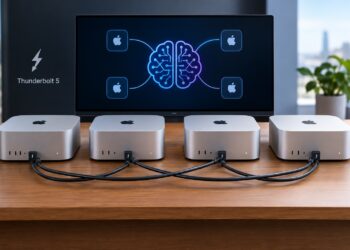
| Mac Studio M4 Ultra 256–512GB | 256+ GB | DeepSeek V4-Flash FP8, Kimi K2.6 native INT4, V4-Pro at heavy quant | Serious local frontier inference; the “running 1T models locally” headline machine |
Throughput examples (Mac Studio M3 Ultra, real benchmarks):
- Llama 3.3 70B Q4 — ~10–15 t/s (vs 20–35 on 4090, but Mac fits much larger models)
- Qwen 3.6 35B-A3B Q4 — ~25–40 t/s; MLX is roughly 2× faster than Ollama on the same model — worth knowing
- Kimi K2.6 native INT4 — single-digit t/s but it runs at all, which is the point
- DeepSeek V4-Flash INT4 — ~5–10 t/s on 192GB+ machines
MLX vs llama.cpp on Apple Silicon: MLX (Apple’s native framework) gives the best performance for many models — up to 2× over llama.cpp Metal on Qwen 3.6 35B-A3B in published benchmarks. llama.cpp has wider model support. Most people end up using both depending on the model.
Real production scenarios:
- Solo developer or small team running Llama 3.3 70B or Qwen 3.6 35B-A3B locally for daily coding work — best price/performance for this use case in 2026.
- Researcher evaluating frontier open models without datacenter access.
- Small consultancy giving on-site demos of large models.
- Privacy-focused power user running a frontier model fully offline.
- The 256GB+ Mac Studio specifically for “demonstrating Kimi K2.6 or DeepSeek V4-Flash on a single machine.”
What MLX is NOT good for: high-concurrency serving. If you need to serve more than ~5 concurrent users, NVIDIA wins decisively.
Tier 4 — Single data-center GPU
| Hardware | VRAM | What runs (FP16) | Throughput characteristics |
|---|---|---|---|
| A100 80GB | 80 GB | Llama 3.3 70B FP16, Mistral Large dense, Qwen 3.6 35B-A3B with huge context | Reliable workhorse; ~2× slower than H100 but cheaper |
| H100 80GB | 80 GB | Same as A100 + native FP8 support; Llama 4 Scout INT4 | Production standard for 70B-class models |
| H200 141GB | 141 GB | Llama 4 Scout FP16, Qwen 3.5 122B-A10B FP16, very long contexts | Best single-GPU for MoE in the 100B class |
| B200 (Blackwell) | 192 GB | DeepSeek V4-Flash INT4, larger MoE models | Current top-tier; major throughput jump over H100 |
Real production scenarios:
- Production serving for SaaS with hundreds-to-thousands of users (vLLM + Llama 70B on H100).
- Batch processing pipeline (extract structured data from millions of documents).
- Enterprise internal AI platform serving thousands of employees.
- Fine-tuning 7B–13B models at full precision; LoRA on 70B.
Realistic cost: Cloud — $2–5/hr depending on provider. On-prem H100 — ~$25–40K per GPU plus the server.
Tier 5 — Multi-GPU data-center cluster
| Configuration | Total VRAM | What runs | Use case |
|---|---|---|---|
| 4× H100 / 2× H200 | 320–280 GB | Kimi K2.6 native INT4, DeepSeek V4-Flash FP8, Llama 4 Maverick INT4 | The new “frontier open model” baseline in 2026 |
| 8× H100 (single DGX node) | 640 GB | Llama 4 Maverick FP8, DeepSeek V4-Flash FP16, Kimi K2.6 FP8 | Standard “frontier open model in production” config |
| 8× H200 | 1.1 TB | DeepSeek V4-Pro INT8, Kimi K2.6 FP16 | Max-quality frontier MoE serving |
| 16× H100+ (multi-node, InfiniBand) | 1.3 TB+ | DeepSeek V4-Pro FP16, very long context frontier serving | Hyperscale serving, model providers |
Real production scenarios:
- Self-hosting DeepSeek V4 for a regulated enterprise (bank, hospital, government).
- Startup serving a frontier open model as their own API product.
- Multi-tenant AI platform with thousands of concurrent users.
- Research lab running frontier inference + fine-tuning experiments.
Part 4 — Quick Reference Decision Matrix
| If your situation is… | Pick this model | On this hardware |
|---|---|---|
| Solo dev, want a coding assistant | Qwen 3.6 35B-A3B or Devstral 24B | RTX 4090 / Mac M4 Max 36GB+ |
| Small team, internal RAG over docs | Llama 3.3 70B (Q4) | RTX 4090 / Mac Studio 96GB / cloud H100 |
| Mid-size SaaS, need to self-host AI features | Llama 3.3 70B or Qwen 3.6 35B-A3B | 1× H100 with vLLM |
| EU enterprise, GDPR-sensitive | Mistral Small / Medium | 1× H100 or 2× RTX 5090, EU datacenter |
| Multilingual product (Asia + global) | Qwen 3.5 / 3.6 family | Sized to your traffic |
| Frontier open quality, regulated industry | DeepSeek V4-Pro | 8× H200 cluster |
| Self-hosted frontier coding agent | Kimi K2.6 (native INT4) | 4× H100 or 2× H200 |
| Open agentic coding product (startup) | Kimi K2.6 or DeepSeek V4-Flash | Single H100 DGX or hosted provider |
| Reasoning/math research | DeepSeek R1 or V4-Pro | 8× H100 / H200 |
| Local agent with tool calling on a budget | Gemma 4 9B | RTX 4070 Ti / Mac M3 Pro |
| Vision + text on consumer hardware | Gemma 4 9B (vision) or Llama 4 Scout | RTX 4090 / Mac M4 Max |
| Frontier model on a single machine for personal use | Kimi K2.6 (native INT4) or DeepSeek V4-Flash | Mac Studio M4 Ultra 256GB+ |
| Squeezing max throughput from NVIDIA hardware | Nemotron variants | H100/H200/B200 with TensorRT-LLM |
| Long-context (>1M tokens) | Llama 4 Scout (10M) or DeepSeek V4 (1M) | Sized to model |
Part 5 — Three Patterns Worth Internalizing
1. MoE is for serving, dense is for fitting. Running one user on one machine? Dense models give you more quality per GB of memory. Serving lots of users? MoE wins because the active-parameter count drives your per-token cost while the total-parameter count drives your one-time memory bill.
2. The Mac Studio is real, but only for single-user large-model inference. A 256GB Mac Studio runs models that would cost $80K+ in NVIDIA hardware, at single-user speeds. Genuinely useful for solo developers, researchers, small consultancies. Not a production serving platform — for that, NVIDIA wins on throughput, batching, and software maturity. Use MLX over llama.cpp when both support the model — measurable 2× speedups in 2026.
3. Native quantization changes the deployment math. Kimi K2.6 ships natively at INT4. DeepSeek V4 ships in FP8 + FP4 mixed. This is a meaningful shift from the older world where quantization was always a quality-vs-fit trade-off. For native-quantization models, INT4 is the intended deployment — you’re not giving anything up. Expect more models to follow this pattern through 2026.
Closing thought
Open weights in 2026 cover the full quality spectrum. There is no longer a frontier capability that is only available behind a closed API — DeepSeek V4-Pro, Kimi K2.6, and Qwen 3.6 Max all sit within striking distance of GPT-5 and Claude Opus on the benchmarks that matter for production work. The real engineering question is no longer “open vs closed” — it’s “which open model, at what quantization, on what hardware, for which workload.” The numbers in this guide should give you enough to make that call without guessing.
The pace will continue. Expect another major release wave by end of Q3 2026 — likely DeepSeek V4.x, Qwen 4, and a Llama 4.x refresh. The architectural patterns — MoE economics, quantization trade-offs, MLX vs CUDA, sizing-to-hardware matrix — will not change. Build your system around the patterns, not the model names.