





OpenAI’s Latest Models Explained: GPT-5.5, GPT-5.4, and What They Mean for You
OpenAI just shipped its biggest architectural overhaul since GPT-4. Here’s what changed, what it can do, and how it stacks up against Claude and Gemini.
The AI race has never been tighter — or more confusing. OpenAI’s model lineup has ballooned from a single flagship into a tiered family of Instant, Thinking, Pro, Mini, and Nano variants. If you’ve lost track of which model does what, you’re not alone.
This guide cuts through the noise. Here’s what OpenAI’s latest models actually are, what’s genuinely new, and whether they’re worth your attention.
What’s Actually New: The 2026 OpenAI Lineup at a Glance
OpenAI now operates three tiers in ChatGPT:
- GPT-5.5 — The flagship, launched April 23, 2026. The first fully rebuilt model since GPT-4.5, designed for agentic and multi-tool workflows.
- GPT-5.4 family (Thinking / Pro / Mini / Nano) — Released March 2026. Reasoning-focused models with adjustable thinking depth. Replaced GPT-4o and the original GPT-5 in February.
- GPT-5.3 Instant — The default for all users, including free accounts. Fast and capable for everyday tasks.
The short version: GPT-5.5 is not a ChatGPT upgrade. It’s a tool for AI agents that can plan, use software, and complete multi-step work autonomously. If you’re building those workflows, it matters a lot. If you’re using ChatGPT for writing or Q&A, GPT-5.3 Instant handles most of it just fine.
The Biggest Change: GPT-5.5 Is Built Different
Every GPT-5.x model from 5.1 to 5.4 was an incremental refinement on the same underlying architecture. GPT-5.5 is a ground-up rebuild — and that distinction is real, not just marketing.
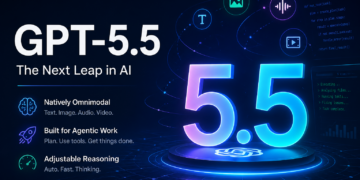
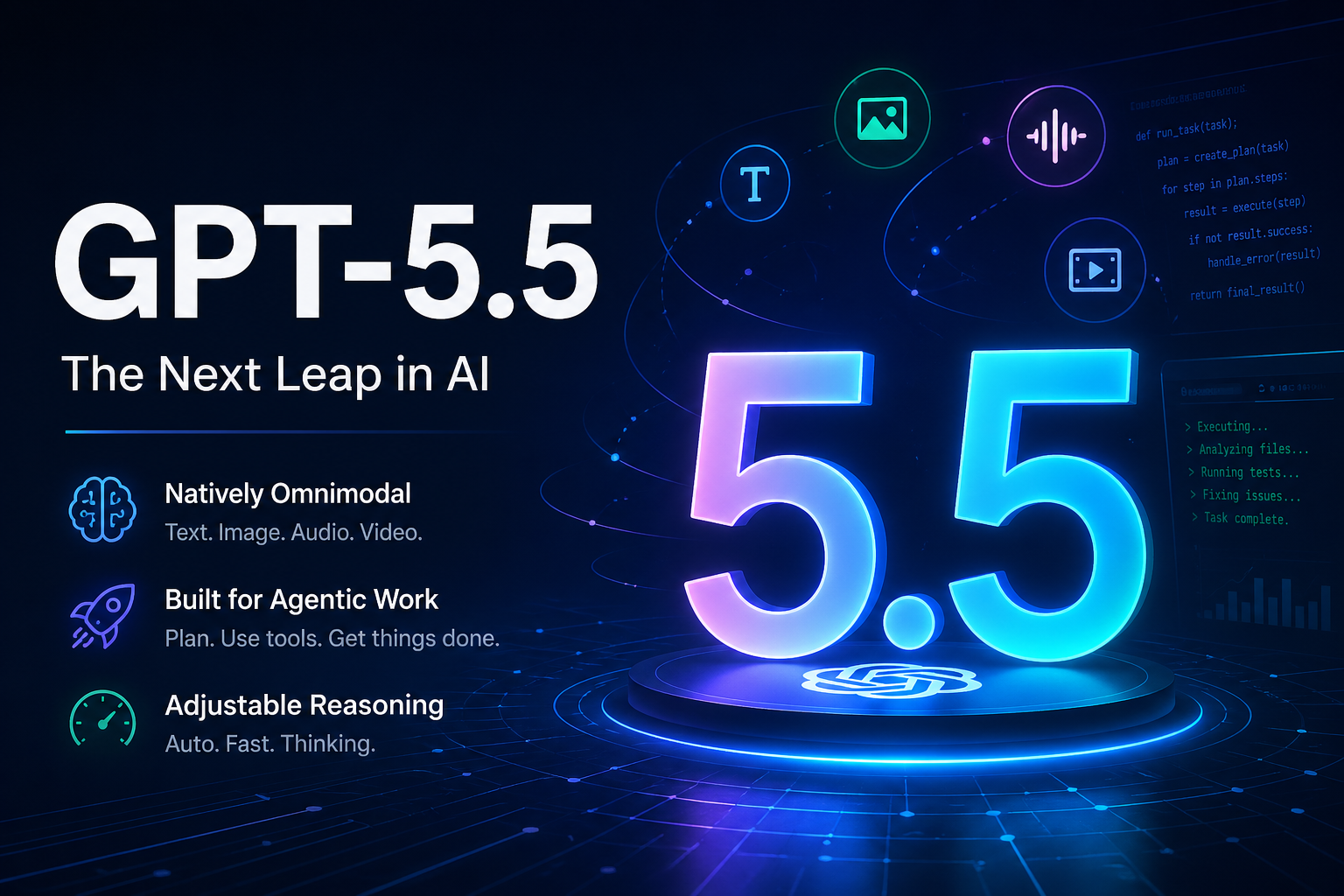
Natively omnimodal. Previous “multimodal” models were pipelines in disguise: separate text, image, and audio systems passing outputs to each other. GPT-5.5 processes all four modalities — text, images, audio, and video — through a single unified architecture. The practical result is more coherent reasoning across formats. A model that can simultaneously reason about what it hears and sees, not just process them sequentially.
Built for agentic work. Earlier models could call tools. GPT-5.5 is designed to orchestrate them. It plans which tools to use, sequences calls, adapts when something fails, and handles tasks spanning dozens of steps. On Terminal-Bench 2.0 — a real-world agentic workflow benchmark — it scored 82.7%, the widest lead it holds over any competitor. It’s the default model in OpenAI’s Codex coding environment for exactly this reason.
Adjustable reasoning depth. You can now choose Auto, Fast, or Thinking modes. Auto routes intelligently based on query complexity. Thinking engages extended chain-of-thought for hard problems. This collapses the old friction of choosing between a chat model and a reasoning model — the system adapts.
How Far Has OpenAI Come? A Generation-by-Generation View
| GPT-4o | GPT-5 (Aug 2025) | GPT-5.5 (Apr 2026) | |
|---|---|---|---|
| Coding (SWE-bench) | 30.8% | ~60% | 74.9%+ |
| Context Window | 128K tokens | 128K tokens | 256K tokens |
| Multimodal | Text + image + audio | Text + image + audio | Natively omnimodal (incl. video) |
| Agentic Capability | Moderate | Strong | Best-in-class |
| Open Weights | No | No | Yes (gpt-oss-120b, Apache 2.0) |
The jump from GPT-4o to GPT-5 was the biggest single-generation coding leap in the company’s history. GPT-5.5 represents a more targeted improvement — less about raw benchmarks, more about reliability in autonomous, long-horizon tasks.
Real-World Use Cases: Where This Actually Matters
Software engineering. GPT-5.4’s 74.9% SWE-bench Verified score means it can autonomously resolve roughly 3 in 4 real GitHub issues. That’s the benchmark powering tools like Cursor and Windsurf, where AI is moving from autocomplete to full task execution.
Enterprise document work. With a 256K-token context window, GPT-5.5 can ingest entire contracts, financial filings, or technical specs in one call — comparing clauses, flagging anomalies, and summarizing at depth. DNV (shipping industry) reduced compliance review effort by 90% using Azure OpenAI on similar document-heavy tasks.
Autonomous agents. ChatGPT’s agent mode can now browse the web, run Python code, analyze files, and generate images within a single workflow. This is the shift from AI as tool to AI as collaborator.
Voice and translation. Advanced Voice now supports real-time language translation — ask it to translate, and it continues translating throughout the conversation. GPT Realtime (gpt-realtime-1.5) enables native voice-in/voice-out for developers building speech applications.
OpenAI vs. Claude vs. Gemini: Who Wins in 2026?
Here’s the honest picture — no single model leads everything.
| GPT-5.5 | Claude Mythos | Gemini 3.1 Pro | |
|---|---|---|---|
| Agentic Workflows | ✅ Best (84.9% GDPval) | Good | Good |
| Coding (SWE-bench) | 74.9% | ✅ Best (93.9%) | 63.8% |
| Reasoning (GPQA) | 92.8% | 91.3% | ✅ Best (94.3%) |
| Context Window | 256K | 200K (1M beta) | ✅ Best (2M) |
| Output Speed | Fast | Moderate | ✅ Fastest (129 tok/sec) |
| API Cost (input/1M) | ~$15 | ~$3–$15 | ✅ ~$2 |
GPT-5.5 wins on agentic orchestration and ecosystem breadth. It’s the default for developers building autonomous pipelines and benefits from the widest range of third-party integrations.
Claude Mythos leads on coding — 93.9% SWE-bench is the current industry top score. It also produces the most natural prose output, making it the preferred choice for documentation and long-form writing. The Sonnet tier (~$3/M tokens) offers exceptional value for teams not needing peak performance.
Gemini 3.1 Pro leads on reasoning benchmarks and has the only 2M-token context window on the market — a meaningful advantage for processing massive codebases or document archives in a single call. At ~$2/M input tokens and 129 tokens per second, it’s the most cost-efficient frontier model.
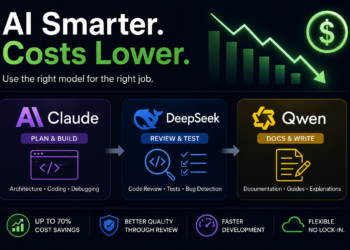
The practical takeaway: Sophisticated teams in 2026 aren’t picking one model. They’re routing — coding tasks to Claude, reasoning and long-context work to Gemini, agentic pipelines to GPT-5.5.
What This Means for Businesses
The current generation marks the end of the AI “pilot” era for most enterprises. These models are reliable enough, capable enough, and cost-efficient enough (especially at the Mini/Nano tier) to power production workflows — not just demos.
The clearest near-term opportunities: knowledge work automation (document review, compliance, reporting), developer productivity (AI coding assistants are now used daily by the majority of developers at major firms), and customer communication at scale. The models that struggled with nuanced, multi-turn conversations a year ago now handle them reliably.
For businesses still evaluating which provider to use: the safe answer is to avoid single-vendor lock-in. The competitive gap between GPT-5.5, Claude, and Gemini is narrow enough that API-level flexibility — the ability to swap or mix models — is worth more than loyalty to any one platform.
The Road Ahead
Three things are clear about where this goes next.
The chat-versus-reasoning model distinction is disappearing. GPT-5.5’s Auto mode is the template — one system that dynamically applies the right level of computation. Every major provider will converge on this pattern.
Agentic reliability is the next battleground. All current agents work well in demos and stumble in unconstrained real-world complexity. The provider that ships genuinely reliable, multi-day autonomous task completion first will set the terms of competition for the next two years.
Open weights are becoming strategically important. OpenAI’s gpt-oss-120b (Apache 2.0) signals that the frontier is no longer exclusively proprietary. For enterprises needing on-premises deployment or cost control at scale, the calculus around closed APIs is changing.
Bottom Line
OpenAI’s GPT-5.5 is a genuine architectural step forward — the first full rebuild in years, designed specifically for the agentic, multi-tool workflows that are increasingly how AI actually gets used in production. It leads its competitors on autonomous task completion and has the broadest developer ecosystem behind it.
But the honest 2026 answer is that no single model wins everything. Claude leads on coding precision. Gemini leads on reasoning and cost. OpenAI leads on agentic breadth and ecosystem. Understanding those trade-offs — not chasing a single “best” model — is what separates effective AI deployment from expensive experimentation.
Last updated: April 2026. Benchmark data is vendor-reported and subject to revision.